
Tales From Otherworld: Collection One
Overview
Tales From Otherworld: Collection One is a short-fiction companion to Yasmine Galenorn’s Otherworld series, a work of urban and paranormal fantasy centered on the D’Artigo sisters. The available material does not give a verified first-publication date or a complete record of this collection’s original edition, so a specific year should not be assigned. It is best understood as supplementary fiction within an already established story world, rather than as a standalone novel with one continuous plot.
Galenorn’s official site describes a later book, Otherworld Tales, Volume One, as bringing together three collections that had previously appeared only in electronic form: Tales From Otherworld, Men of Otherworld: Collection One, and Men of Otherworld: Collection Two. That description provides useful context for the short fiction’s publication history, but the expanded volume should not automatically be treated as identical to the particular collection named here. The distinction matters: the later book gathers material from several collections, while this entry concerns Tales From Otherworld: Collection One.
Stories and series setting
The wider series follows Camille, Delilah, and Menolly D’Artigo, sisters who are half human and half Fae and work for the Otherworld Intelligence Agency. Camille is a witch, Delilah a werecat, and Menolly an acrobat turned vampire. Sent Earthside, they become caught up in a demonic war. With friends and lovers, they face Shadow Wing, the Demon Lord, whose efforts threaten both Earthside and the sisters’ other world. The short fiction turns away from the forward drive of that large-scale conflict to explore the characters’ histories, private experiences, and connections between the realms.
The official description of the related collection points to several questions that convey the kind of material these stories address: what happened when Camille cast an invisibility spell; how the sisters’ parents, Maria and Sephreh, met; the identity of the ghost haunting the D’Artigo house; and the “turkey incident” that precipitated the opening of Priestess Dreaming. These prompts suggest a mixture of family history, supernatural mystery, comic or domestic mishap, and narrative backstory. They also show how the stories can add context to events that a reader may encounter in the novels. The available description does not provide a story-by-story synopsis, so these questions are better treated as indications of the collection’s concerns than as a basis for inventing detailed plot resolutions.
Themes, background, and place in the series
The collection’s defining appeal is its expansion of a shared fictional world through smaller, character-focused episodes. Sisterhood and family inheritance sit beside questions of identity, memory, loyalty, and belonging. Witchcraft, Fae heritage, vampirism, werecat transformation, ghosts, and demonic danger supply the supernatural framework, while the emphasis on parents, lovers, friends, and incidents from the characters’ past gives that framework an intimate scale. Short fiction can linger on a missing moment or a secondary character in a way that a long sequence of novels, driven by an ongoing war, may not.
Its writing context is therefore closely tied to the growth of the Otherworld series. The novels establish the sisters and the struggle between worlds; companion tales can revisit earlier events, fill in personal histories, and give readers additional points of entry into familiar settings. The author’s own presentation invites readers to learn the secrets and histories of people in Earthside and Y’Elestrial, the realms associated with the series. No separate award or measurable, independent cultural impact for this collection is documented in the supplied material. Its lasting status is more modest and specific: it is an ancillary part of a substantial urban-fantasy series, valued for enriching the continuity and character relationships of the larger narrative. For readers already invested in the D’Artigo sisters, its importance lies in the added texture it gives to their world, not in replacing the central novels.
About the Author
Background and education
Yasmine Galenorn is an American author of urban fantasy, paranormal fiction, mystery, and romance. The available biographical material does not establish her birthplace or childhood home, so those details cannot be supplied responsibly. It does report that she graduated from Evergreen State College, where she majored in theater and creative writing. Those fields are relevant to a writer whose work often depends on distinctive characters and dramatic supernatural situations, although the evidence does not justify attributing her style to any single formative episode.
Career and major works
Galenorn has written across paranormal women’s fiction, urban fantasy, paranormal mystery, paranormal romance, and combinations of those categories. Her series include Otherworld, Indigo Court, The Wild Hunt, Chintz ’n China, Moonshadow Bay, Bewitching Bedlam, and Whisper Hollow, among others. She has also published metaphysical nonfiction. Simon & Schuster’s author page notes that she writes under the pseudonym India Ink. Galenorn describes her bibliography as numbering more than one hundred books; catalogues may count short fiction, editions, and series entries differently, so totals should be treated as approximate rather than as a fixed measure.
Her best-known body of work includes the Otherworld, also called Sisters of the Moon, series. It follows the D’Artigo sisters: Camille, a witch; Delilah, a werecat; and Menolly, an acrobat who becomes a vampire. The half-human, half-Fae sisters work for the Otherworld Intelligence Agency and are sent Earthside, where they become involved in a demonic conflict threatening two worlds. The companion stories collected under the Otherworld Tales name add character histories and episodes that sit beside the larger novels’ continuing plot. Her other series demonstrate the breadth of her work in supernatural mystery and fantasy as well as romance.
The supplied sources do not give verified first-publication years for these individual series or books, so assigning dates to particular titles would be speculation. They do establish two career milestones. In April 2012, Galenorn received a Career Achievement Award in Urban Fantasy at the Romantic Times Convention. She also says that she spent twenty years writing for traditional publishers before moving to independent publishing in 2016, a change she made to gain greater creative freedom. Those dates mark recognition and a change in publishing practice, not the publication dates of specific novels.
Reputation and later status
Galenorn identifies herself as a New York Times, USA Today, and Publishers Weekly bestselling author. Publisher material likewise highlights her association with the Otherworld books. Her reputation rests on a large, interconnected catalogue and sustained work in popular supernatural fiction, where fantasy, mystery, romantic relationships, and women-centered narratives often overlap. She has also described herself as a shamanic witch and as an elder in the Pagan community; these are elements of her public self-description, not grounds for assuming that every fictional detail has a direct autobiographical source.
The supplied information gives no death date or report of her death. Her official site presents her in the first person and discusses her ongoing author identity and publishing choices. A careful biography can therefore say that the available sources do not record her death, rather than inventing a date or unsupported personal details. Her lasting standing is most clearly represented by her extensive series work, her long career in paranormal and urban fantasy, and the readership associated with the D’Artigo sisters and her other supernatural worlds.
StoryFlow

Camille’s Clothing-Disappearing Spell
This flow traces Camille’s failed invisibility experiment from idle curiosity through public embarrassment to a lasting decision to leave such magic alone.

Camille’s Misread Human Encounter
This flow follows how Camille mistakes a customer’s spell-induced confusion for ordinary attraction before learning that her clothes have vanished from everyone else’s sight.
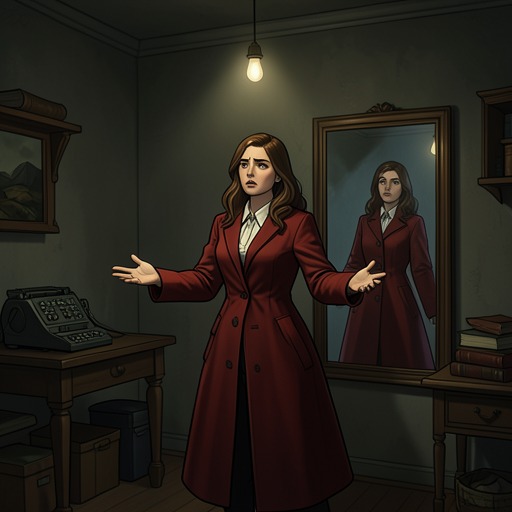
Camille’s Magical Overconfidence
This flow traces Camille’s combination of experimentation, misplaced confidence, and self-deprecating response to a spell that produces a more disruptive result than she expected.
